

Jobcadu

Having years of experience can give you a strong advantage in the workplace. You have developed industry knowledge, built professional relationships, handled difficult situations, and learned how to make decisions under pressure.
But experience alone may not be enough to future-proof your career.
As technology, business models, and workplace expectations continue to change, the skills that made you successful in the past may not be the only skills you need for the future.

For senior professionals, the challenge is not about starting over. It is about building on the experience you already have while developing the skills that will keep your career relevant.
Five skills are particularly valuable across industries:
AI literacy
Strategic thinking
Leadership
Adaptability
Communication and influence
These skills are not limited to one specific job or industry. They can help you remain effective, competitive, and prepared for new opportunities as your career evolves.

AI is changing how many professionals work.
You do not necessarily need to become an AI engineer or learn how to build complex AI systems. But senior professionals increasingly need to understand how AI can be used, where it adds value, and where human judgment is still essential.
AI literacy means being comfortable with the fundamentals of AI and understanding how it can support your work.
Depending on your role, this might include:
Using AI tools to improve productivity
Understanding the capabilities and limitations of generative AI
Using AI to analyze or summarize information
Automating repetitive tasks
Evaluating AI-generated information
Understanding basic AI risks and ethical considerations
Identifying opportunities to integrate AI into existing workflows
For a senior professional, AI literacy is not simply about knowing how to use another tool.
It is about understanding how technology can change the way your team, department, or organization operates.
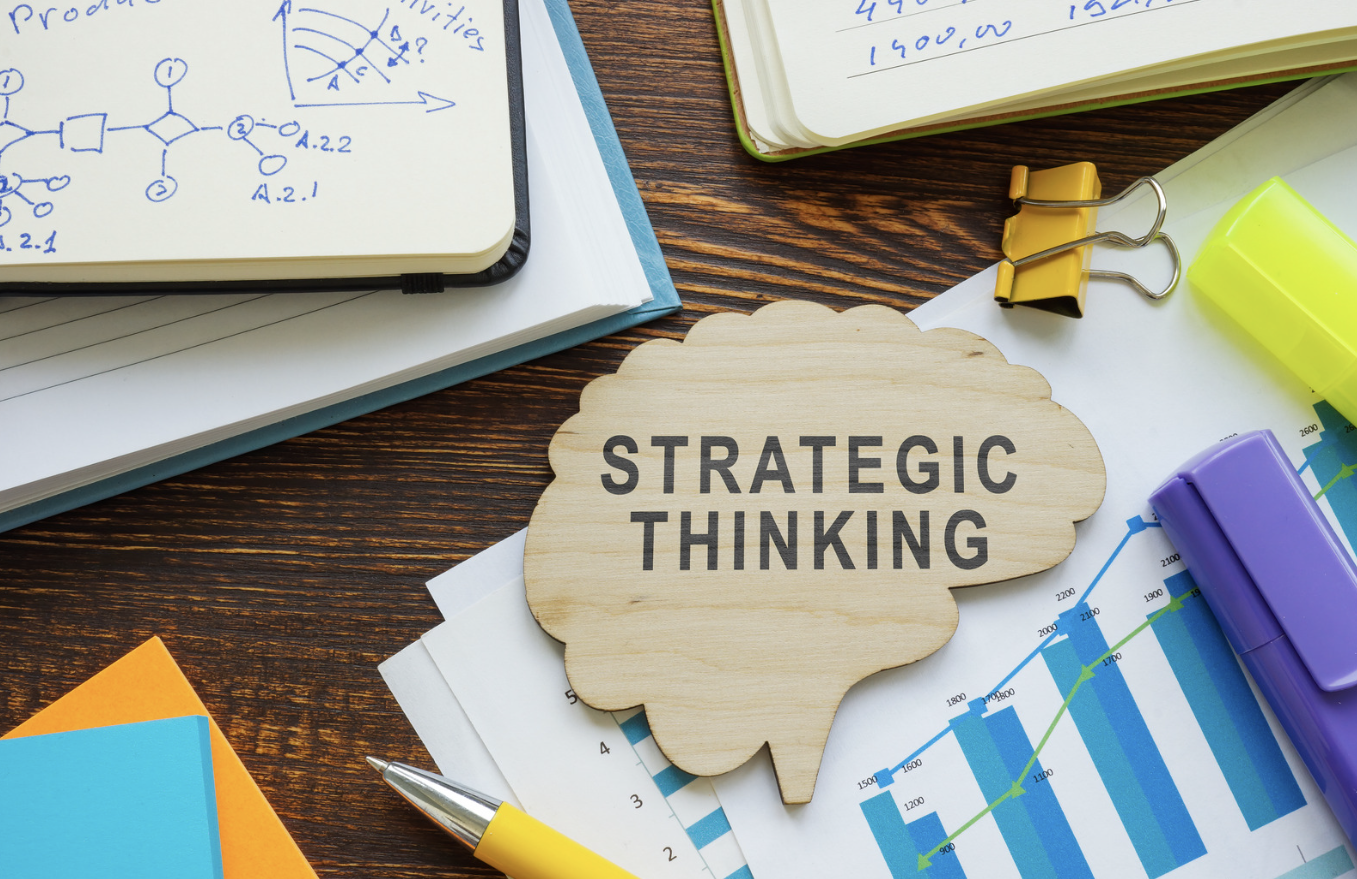
As you move into more senior positions, your value is increasingly determined by your ability to see the bigger picture.
Instead of focusing only on “What needs to be done?”, strategic thinking asks: “Why does this matter, and what should we do next?”
Strategic thinking involves understanding how decisions affect the wider organization and connecting day-to-day actions to long-term goals.
A strong strategic thinker can:
Identify priorities
Analyze complex problems
Recognize opportunities and risks
Connect different business functions
Make decisions based on data and context
Think beyond immediate results
Anticipate potential challenges
Align actions with organizational goals
This skill becomes increasingly important as your responsibilities grow.
A junior employee may be responsible for completing a task.
A manager may be responsible for ensuring the task is completed effectively.
A senior leader may need to decide whether the task should be done at all, why it matters, what resources should be allocated, and how it supports the organization's broader strategy.
That shift from execution to strategic thinking can significantly increase your professional value.
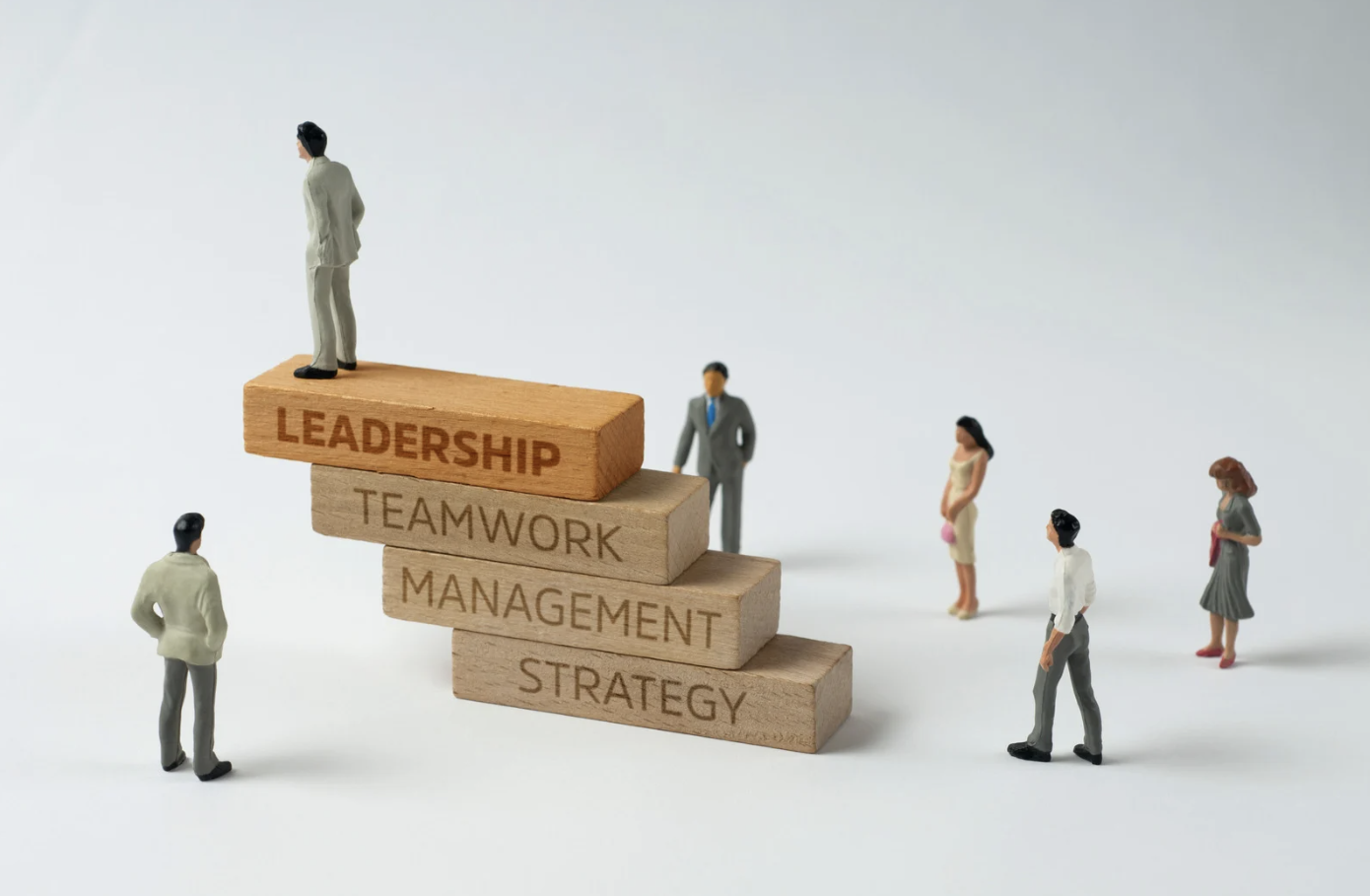 Leadership is not limited to people with “Manager” or “Director” in their job title.
You can demonstrate leadership by taking ownership, influencing decisions, supporting colleagues, solving problems, and helping others succeed.
For senior professionals, leadership becomes especially important because organizations often expect experienced employees to contribute beyond their individual responsibilities.
Strong leadership can involve:
Making decisions
Taking ownership of outcomes
Developing team members
Delegating effectively
Managing conflict
Building trust
Motivating others
Providing feedback
Managing change
Creating alignment across teams
Importantly, leadership is not simply about being the person who gives instructions.
Effective leaders know how to bring people together around a common goal.
This is particularly valuable when organizations face uncertainty or change.
A senior professional who can combine technical expertise with strong leadership can become much harder to replace because they contribute not only through what they personally know, but also through their ability to help others perform better.
One of the biggest career risks for experienced professionals is becoming highly successful at doing things the way they have always been done.
Your experience gives you knowledge, but the ability to adapt determines whether that knowledge remains useful when circumstances change.
Adaptability means being able to adjust when:
Technology changes
Business priorities shift
New processes are introduced
Teams are reorganized
Customer expectations change
Your industry evolves
Your responsibilities expand
You move into a new role
Being adaptable does not mean abandoning your expertise every time something new appears.
Instead, it means being willing to learn, adjust, and apply your existing knowledge in new situations.
For example, a finance professional who has spent years working with traditional reporting processes may need to adapt to automation, data visualization, and AI-supported analysis.
Their previous experience has not become useless.
Instead, they can combine that experience with new capabilities to become more valuable.
This is why adaptability and experience should work together.

The more senior you become, the more important communication becomes.
At junior levels, technical expertise may be enough to complete your responsibilities successfully.
At senior levels, you often need to explain ideas, influence decisions, negotiate priorities, manage stakeholders, and communicate with people who have different perspectives.
Strong communication and influence skills can help you:
Present complex ideas clearly
Communicate with senior executives
Manage stakeholder expectations
Negotiate effectively
Influence decisions without relying on authority
Give and receive constructive feedback
Handle difficult conversations
Build professional relationships
Tell compelling stories using data
Gain support for new ideas
You may have an excellent idea, but if you cannot communicate why it matters, it may never receive support.
This is why communication is not simply a “soft skill.”
For senior professionals, it can directly affect your ability to lead projects, influence stakeholders, and turn ideas into action.
One reason these five skills are so valuable is that they are highly transferable.
Technical skills can sometimes become outdated when tools, systems, or processes change.
Transferable skills, however, can continue to create value across different roles and industries.
Consider a senior professional who changes industries.
Their specific industry knowledge may need to be updated, but their ability to:
Think strategically
Lead teams
Adapt to change
Communicate effectively
Use AI appropriately
can continue to be valuable.
For example, a senior manager moving from retail into technology may need to learn the new industry's terminology, customers, and business model.
But strategic thinking, leadership, adaptability, communication, and AI literacy can still support their success.
This is particularly important if you are considering:
A career change
A promotion
An internal transfer
A move into management
A move into a different industry
A return to the workforce
A future leadership position
The stronger your transferable skills, the more options you may have.
Knowing which skills matter is only the first step.
The next question is:
“Where do I currently stand?”
You may already be strong in some areas while having significant gaps in others.
For example:
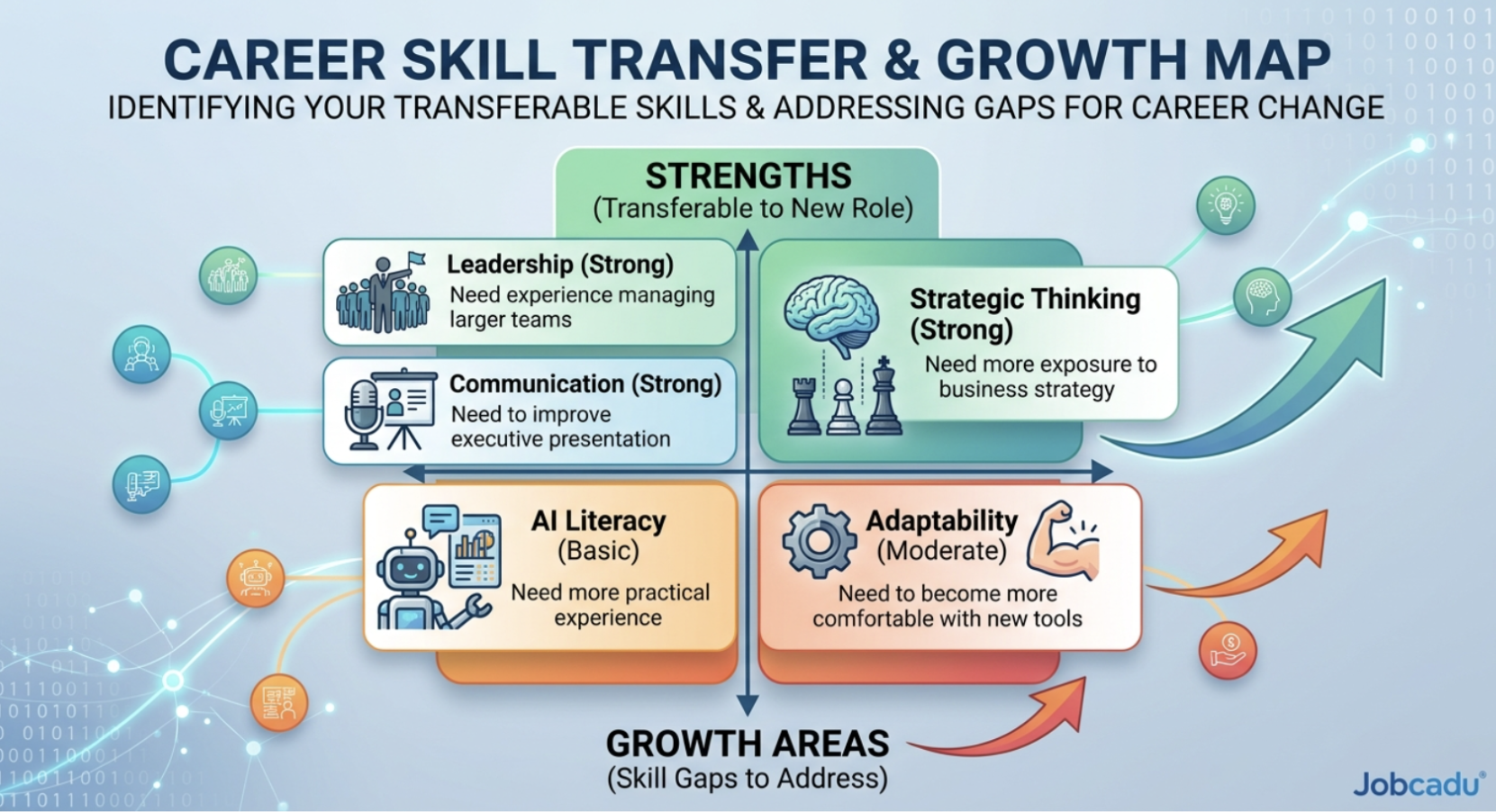
You can start identifying your gaps by asking yourself:
What does my target role require?
Look at job descriptions for positions you want in the future. Identify which skills appear repeatedly.
What skills do I already demonstrate?
Look at your current work, achievements, projects, and responsibilities. Which skills can you already prove through real experience?
Which skills do I understand but rarely use?
There is a difference between knowing a concept and being able to apply it. If you completed an AI course but have never used AI in a real work process, for example, you may still need practical experience.
Which skills could limit my next career move?
Not every skill gap needs to be addressed immediately. Prioritize the gaps that could prevent you from qualifying for the roles you want next.
Once you identify your gaps, create a development plan. You do not need to learn everything at once.
Instead, focus on one or two high-impact areas at a time.
Courses can help you build foundational knowledge and understand new concepts.
For example:
AI courses can help you understand emerging technologies.
Leadership courses can strengthen your management approach.
Strategy courses can develop business and analytical thinking.
Communication courses can improve presentations and stakeholder management.
Adaptability can be developed through continuous learning and exposure to new tools and ways of working.
The key is to choose learning that is connected to your career goals.

Learning becomes more valuable when you apply it.
If you are developing AI literacy, look for a process at work that could benefit from AI.
If you are developing strategic thinking, volunteer to contribute to a project where you can analyze business priorities.
If you want to strengthen leadership, mentor a colleague or take ownership of a cross-functional project.
If you want to improve communication, practice presenting complex information to different audiences.
Your skills should evolve alongside your career.
Set aside time every few months to ask:
What new skills have I developed?
Which skills am I using in real work?
What have I achieved using those skills?
Which skills are becoming more important in my industry?
What gaps could limit my next career move?
What should I learn next?
This turns career development into an ongoing process rather than something you only think about when you are looking for a new job.
Knowing which skills you need to develop can make career learning much more focused.
With Jobcadu, you can identify areas where your current skills may need development and explore learning opportunities that can help you prepare for your next career step.
Don't wait for your industry to change before you start preparing.
No sections detected in this article.


