
Posted on November 4, 2025
Growth
Tags:

SWOT is a strategic analysis tool used to evaluate different situations — whether it’s for an organization, a project, or even an individual.
It helps you understand both internal and external factors that can affect your goals and success.
The term SWOT stands for:
S – Strengths: Internal factors that give you advantages or unique capabilities
W – Weaknesses: Internal factors that may hold you back or create disadvantages
O – Opportunities: External factors or trends that you can leverage for growth
T – Threats: External risks or challenges that could impact your progress
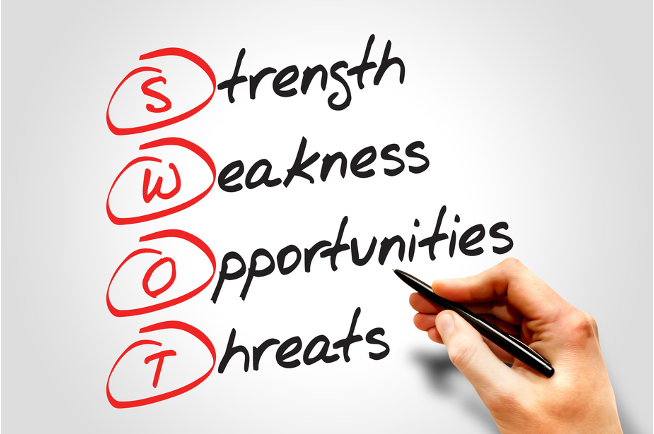 By analyzing SWOT, you can build an effective strategy — one that uses your strengths to seize opportunities, minimizes weaknesses, and mitigates potential threats.
A Personal SWOT Analysis applies this framework to yourself. It helps you identify your potential, limitations, and the environment you’re operating in — both now and in the future.
Doing a personal SWOT allows you to:
✅ Gain a deeper understanding of your skills, personality, and areas for growth
✅ Set clear and realistic career or life development goals
✅ Make informed, strategic decisions about your career and personal growth
✅ Increase your chances of success while reducing risks and mistakes
 How to Analyze Your Own SWOT
To conduct a personal SWOT effectively, divide it into two main areas:
Internal Factors (Strengths & Weaknesses): What’s within your control — your skills, mindset, and habits.
External Factors (Opportunities & Threats): The external environment — industry trends, job market, technology, or economic changes.
Reflect on questions like:
What do I do best at work?
What do others say are my strengths?
What skills or habits limit my growth?
What upcoming opportunities could I take advantage of?
What external risks could affect my career or work-life balance?
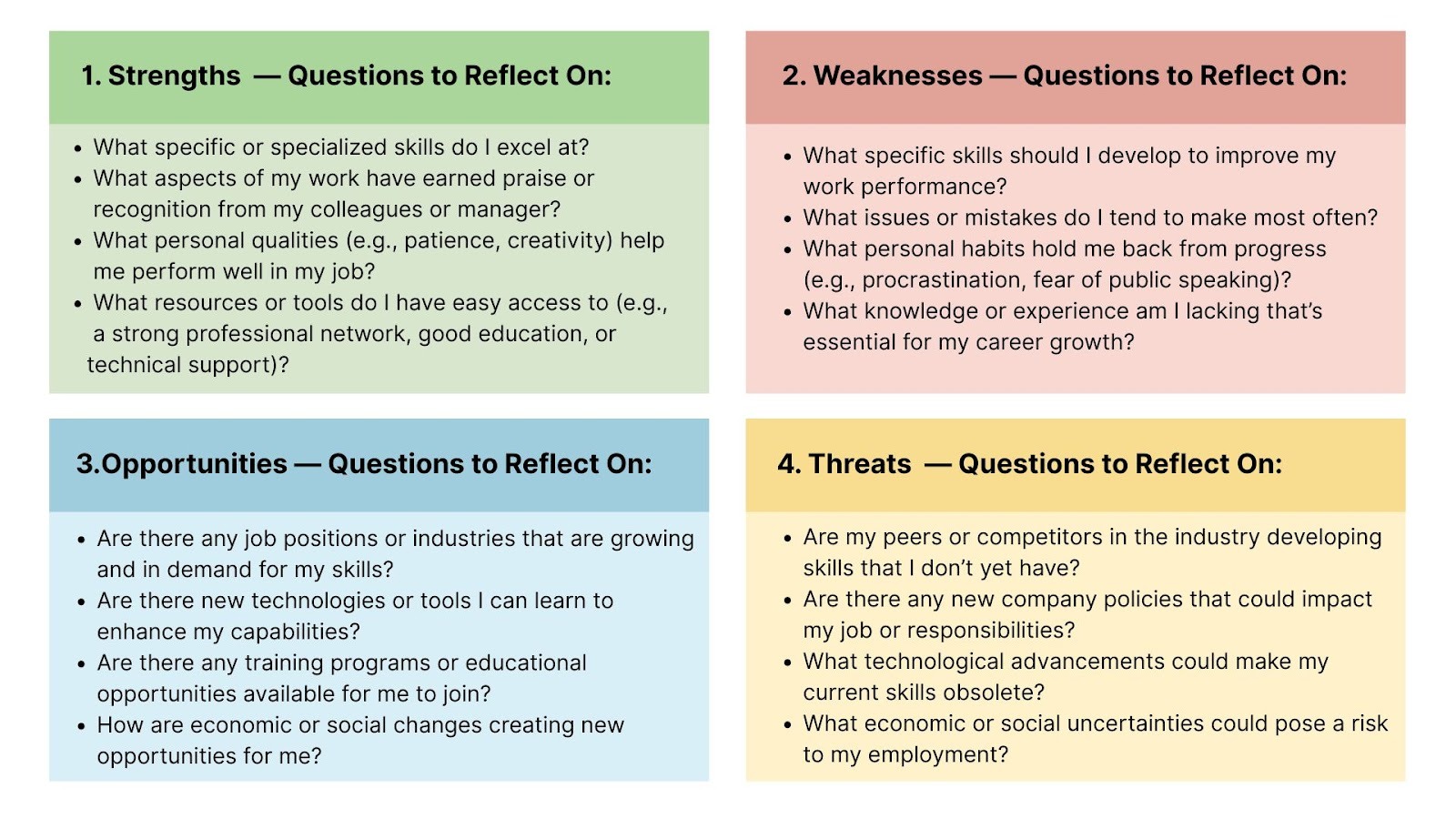 Applying SWOT to Your Career
Your SWOT analysis becomes valuable when you turn it into action.
Here’s how you can apply it in your work life:
Self-Development Planning: Use your strengths to create a focused plan for upskilling or personal growth.
Career Conversations: Share your SWOT insights with your manager or HR during performance reviews or career path discussions.
Time & Task Management: Recognize your weaknesses to organize work more effectively.
Performance Evaluation: Use SWOT to clearly articulate your progress and professional growth.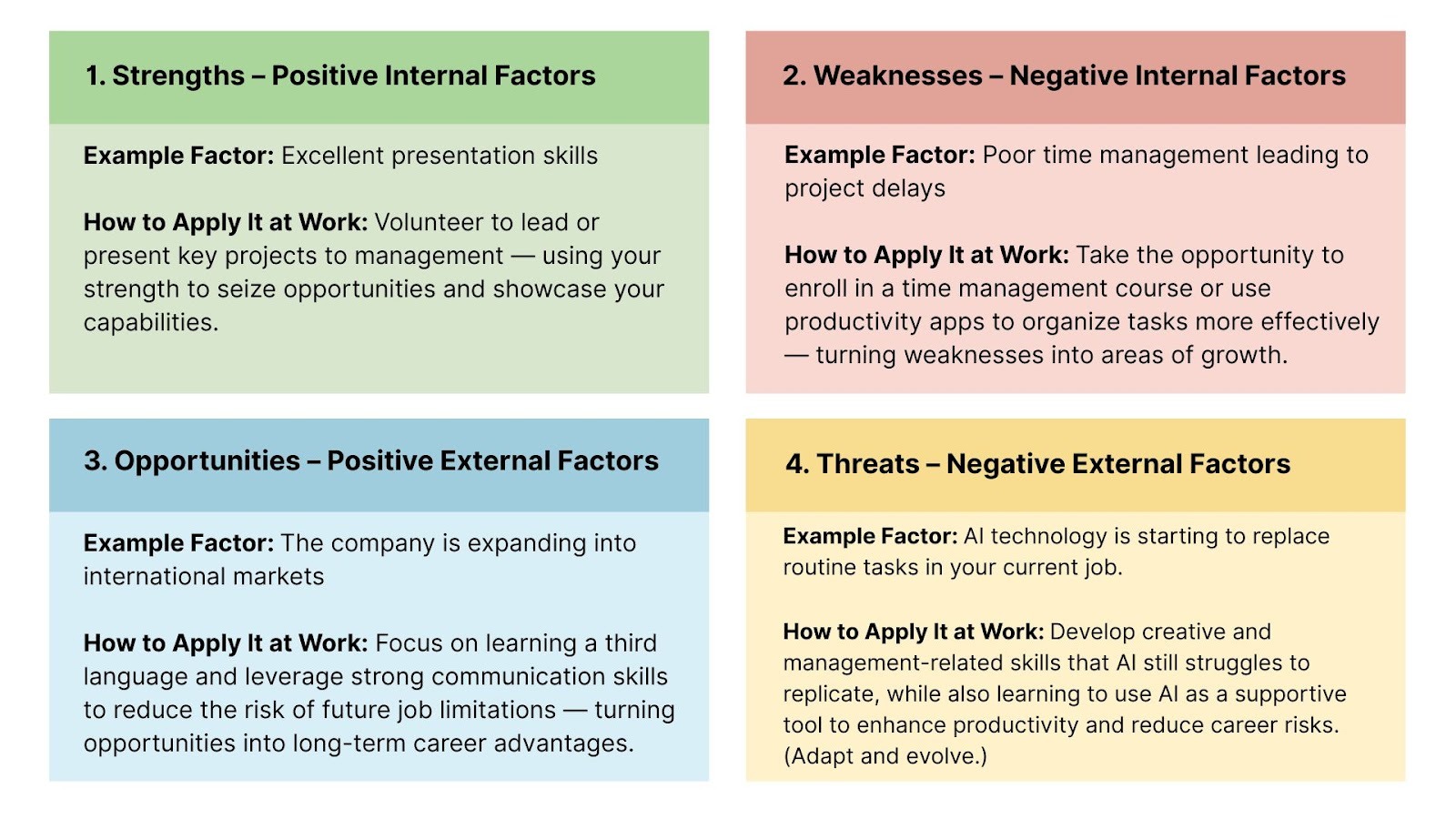
Be Honest & Objective
Self-awareness is key. Ask trusted colleagues or mentors for feedback to get a balanced perspective on your real strengths and weaknesses.
Be Action-Oriented
Don’t just list — plan. Instead of writing “Weakness: Poor time management,” change it to “Plan: Take a time management course within a month.”
Monitor & Update Regularly
Life and work change constantly. Review your SWOT every 6 months or whenever there’s a major shift in your career or personal life.
Leverage Strengths to Cover Weaknesses
Use your strengths to balance out your weak spots.
Example: If your strength is “attention to detail” but your weakness is “public speaking,” prepare detailed scripts to boost your confidence when presenting.
Applying SWOT to your career isn’t just an exercise — it’s a self-strategy process. When you truly understand your strengths, acknowledge your weaknesses, and stay aware of opportunities and challenges, you can design a clear, adaptable career plan.
This mindset is what defines the modern professional — someone who not only works smart but also truly understands themselves.
Turn your SWOT insights into real career growth. Discover tips, tools, and jobs that match your goals at www.jobcadu.com

.png&w=3840&q=75)


