
Logo
  • Pro Profile
  • Jobs
  • Career
    Career PathwayGrowthEducationInspirationPersonality
    Jobs & IndustriesJob SearchResume & PortfolioSalaryWell-being
  • Education
  • Resume Builder
  • Post Job


  • Jobcadu Logo

    Best career platform for job search, recruitment, career assessment & education

    30,000+ Jobs

    Jobs Functions

    Sales

    Marketing

    Accounting & Finance

    Information Technology (IT)

    Data & Analytics

    For Job Seekers

    Jobs

    Resume Builder

    Education Resources

    Resume Resources

    For Corporate Users

    Post Jobs

    Resources

    About Us

    Terms of Use

    Privacy Policy


    © 2025 Jobcadu. All rights reserved

    1. Home

    2. Careers

    3. Understand Business Easier with BMC — A Must-Know Tool for the Modern Workforce

    Understand Business Easier with BMC — A Must-Know Tool for the Modern Workforce

    Posted November 27, 2025

    Growth

    Tags:

    BMC Business
    BMC
    Business
    Success
    Understand Business Easier with BMC — A Must-Know Tool for the Modern Workforce

    What is BMC and Where Did It Come From?

    The Business Model Canvas (BMC) is a tool that helps visualize and plan a business model in a single page. It was developed by Alexander Osterwalder, a business theorist who aimed to simplify the process of designing business models by showing all key components in one connected view—rather than writing hundreds of pages of business plans.

    Screenshot 2568-11-27 at 18.37.22.png

    Why BMC Matters for Businesses and Startups

    For Entrepreneurs / Startups > BMC helps identify how your business creates value, who you sell to, and where your revenue comes from.

    For Employees > BMC isn’t only for business owners. It helps employees understand the big picture and how their work contributes to the organization’s value and goals.
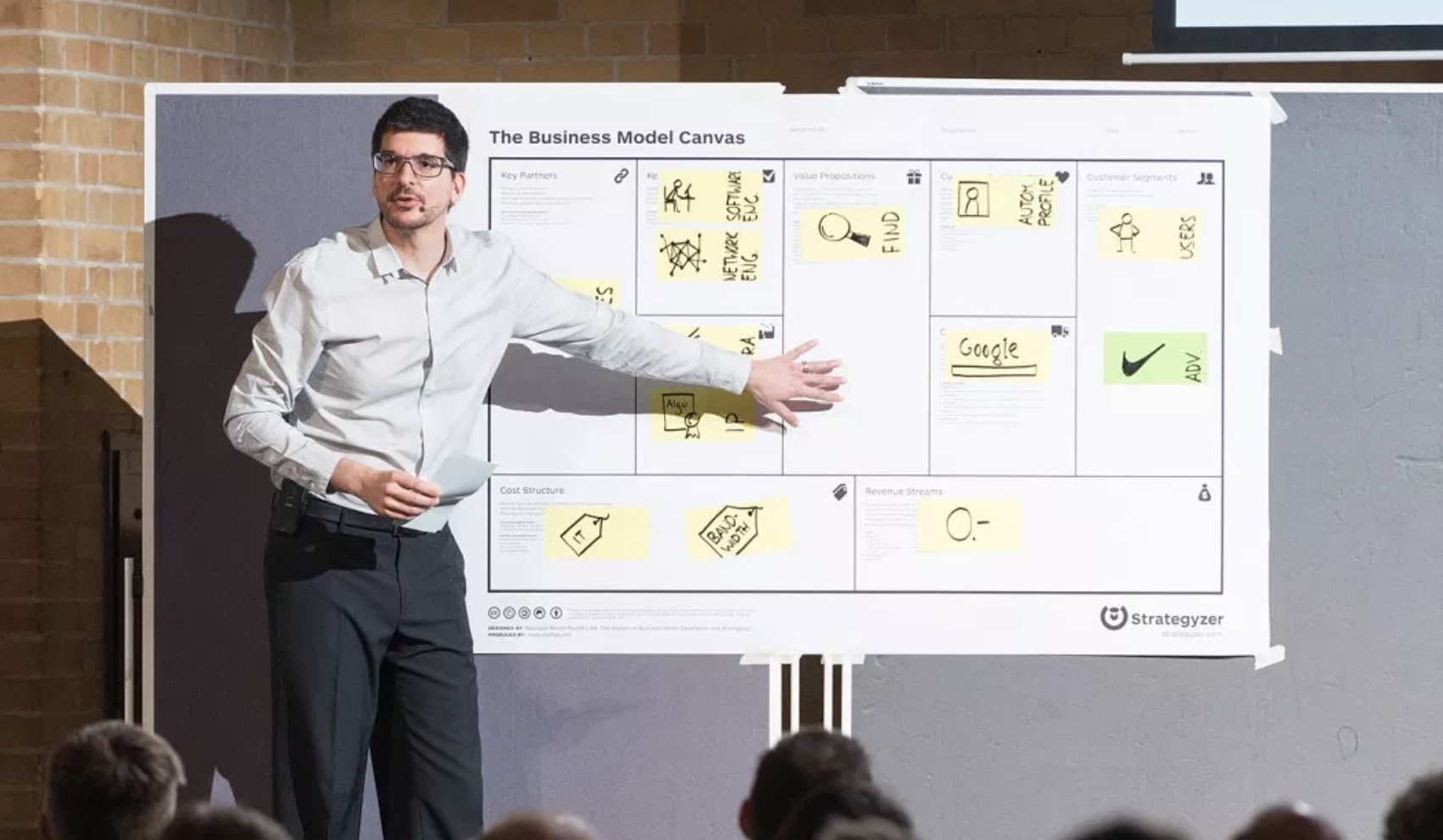
    What Does the Business Model Canvas Include?

    Screenshot 2568-11-27 at 18.38.17.png

    Below are the nine core elements of a BMC and why each is important:

    1. Key Partners

    Business partners enhance the organization’s capabilities—whether through resources, technology, capital, or distribution channels. For example, an online business needs reliable logistics partners and payment systems to operate smoothly.

    2. Key Activities

    These are the essential actions required to deliver value to customers, such as product development, service delivery, or innovation. Example: A busy restaurant might develop an online queueing system to improve customer experience.

    3. Key Resources

    These include everything the business needs to operate successfully:

    • Physical assets (machinery, office buildings)

    • Intellectual property (patents, trademarks)

    • Human resources (team members)

    4. Value Proposition

    This is the heart of the BMC.  You must define:

    • What makes your product/service unique

    • What customer pain points you solve

    • How you stand out from competitors

    Example: Food delivery service that promises “delivery within 30 minutes”.

    5. Customer Relationships

    Ways to build and maintain customer relationships, such as:

    • Membership or subscription programs

    • After-sales service and feedback collection

    • Community building (Facebook groups, LINE OA)

    • Automated systems (chatbots, self-service tools)

    These help strengthen trust and brand loyalty.

    6. Customer Segments

    You must identify who your customers are.Segmenting by age, gender, income, occupation, behaviors, or special needs helps you communicate and market effectively.

    7. Channels

    These are the methods used to deliver value to customers.  Channels include:

    • Online (website, e-commerce, social media)

    • Offline (stores, distributors)

    Choosing the right channels depends on your business and customer behavior.

    8. Revenue Streams

    Your income may come from:

    • Subscription fees

    • Direct sales

    • Rental or per-use fees

    • Advertising

    Understanding revenue streams helps you identify core income sources and expansion opportunities.

    9. Cost Structure

    Understanding costs helps businesses plan and stay financially healthy.Costs include:

    • Fixed costs: rent, salaries

    • Variable costs: raw materials, production labor

    • ExampleOther expenses: marketing, outsourcing

    Seeing the full cost structure helps improve efficiency and reduce unnecessary spending.

    How to Create an Effective BMC

    • Start with Customer Segments and Value Propositions

    • Use sticky notes for flexibility

    • Keep everything short, clear, and simple

    • Update regularly as the market changes

    BMC (Local Coffee Shop)

    • Customer Segments: Local workers and students

    • Value Proposition: Quality coffee, affordable prices, cozy atmosphere

    • Channels: Physical shop + food delivery apps

    • Customer Relationships: Loyalty cards, promotions

    • Revenue Streams: Coffee and bakery sales

    • Key Resources: Baristas, coffee ingredients

    • Key Activities: Coffee brewing, marketing

    • Key Partners: Coffee bean suppliers, delivery apps

    • Cost Structure: Rent, salaries, raw materials

    Pros & Cons of Using BMC

    Advantages

    • Clear overview of the entire business on one page

    • Easy to understand and communicate with teams

    • Flexible and adjustable

    Limitations

    1. High-level overview; lacks deep details

    2. May not cover legal or complex financial issues

    3. Works best when paired with tools like SWOT or full business plans

    Online Tools to Create BMC Easily

    • Canva (free templates)

    • Miro / MURAL (collaborative online whiteboards)

    • Strategyzer (official platform by BMC creators)

    How BMC Relates to Everyday Working Professionals

    • Helps employees understand the big picture and their impact

    • Useful for freelancers or anyone starting small projects

    Helps analyze your company’s strengths, weaknesses, and opportunities

    Screenshot 2568-11-27 at 18.39.22.png

    Final Thoughts

    The Business Model Canvas is an essential tool for understanding and designing business strategies. It benefits entrepreneurs, startups, and working professionals by connecting daily work to the organization’s value and long-term goals. If you want to plan a new business or better understand strategic work, BMC is a tool you should not overlook. For more content on career growth, marketing, and skill development, explore Jobcadu,  the career platform that inspires your professional journey.


    Related Careers

    Thumbnail for What Is the McKinsey 7S Model? A Holistic Framework to Understand Organizations for the Modern Workforce

    What Is the McKinsey 7S Model? A Holistic Framework to Understand Organizations for the Modern Workforce

    In today’s rapidly changing work environment, understanding “our organization” is just as important as understanding “our job.” Technological disruption and unpredictable market conditions force companies to adapt constantly  and employees who understand how their organizations work will be better equipped to contribute and drive meaningful change. One classic framework that provides a clear, comprehensive view is the McKinsey 7S Framework — a long-standing organizational analysis tool that remains highly relevant today. This model can be applied at the organizational level, the team level, and even for personal career structure and self-assessment. What is the McKinsey 7S Model? The McKinsey 7S Model is a management framework developed in the 1980s by McKinsey consultants Robert H. Waterman Jr. and Tom Peters. It analyzes and develops organizations by examining seven interconnected elements that must be aligned for the organization to function effectively. The 7 elements include: Strategy Structure Systems Shared Values Style Staff Skills Explaining Each of the 7S Elements (With Simple Examples) 1. Strategy The long-term plan is designed to achieve organizational goals and gain competitive advantage. Example: A company focused on innovation will invest more heavily in R&D rather than traditional marketing campaigns. 2. Structure The organizational hierarchy — how authority, responsibilities, and reporting lines are organized. Example: Startups often use a flat structure to accelerate decision-making and flexibility. Large corporations typically use a hierarchical structure with many layers to ensure control and standardization. 3. Systems The processes, procedures, and tools that support daily operations. Examples: Performance review systems Project approval workflows Internal CRM software Supply chain management systems 4. Shared Values (The Core of the Model) The deeply rooted principles and beliefs that guide employees’ behavior and form the foundation of the organizational culture. Examples: “Customer First” “Team Over Individual” “Trust & Transparency” 5. Style The leadership approach and overall management style within the organization. Examples: Participative leadership Authoritative leadership Coaching-style leadership 6. Staff The people in the organization  including headcount, quality, recruitment, development, and employee well-being. Examples: Leadership development programs Diversity management Employee welfare and benefits 7. Skills The core competencies of the organization and the abilities of employees that create competitive advantage. Examples: Technical skills for an AI company Negotiation skills for sales teams Soft skills like critical thinking Benefits of Using the 7S Model in Organizations The 7S framework helps leaders and executives gain a deeper, more holistic understanding of organizational dynamics. It is useful for: Assessing readiness before major strategy shifts or mergers Diagnosing strengths and weaknesses across different organizational areas Aligning goals with culture, ensuring both hard and soft elements support growth Improving communication among HR, leaders, and management teams Creating a shared language and mindset across the organization Example: Applying the 7S Model in Real Life Scenario: A company transitioning from offline to digital Strategy: Add online channels Structure: Establish a dedicated Digital Team Systems: Implement CRM and automation tools Shared Values: Encourage experimentation and new ideas Style: Leaders adopt a coaching-based approach Staff: Hire Data and Digital specialists Skills: Upskill existing staff to use digital tools Using the 7S Model for Personal Career Growth Individuals can also apply 7S to analyze themselves: Strategy = Career goals Skills = Capabilities to develop Style = Your working style Shared Values = What you fundamentally believe and want from the workplace Tips for Applying the 7S Framework Effectively Don’t treat it as just a document — real conversations are needed. Start with Shared Values since they are the core of the model. Review structure and systems every 6 months to maintain alignment. Use it together with other tools like SWOT or Balanced Scorecard. Conclusion Understanding the 7S Model = Understanding the Organization The McKinsey 7S Model acts as a map that shows how every component of an organization is interconnected — not just strategy and structure, but also culture, skills, and people. Analyzing and aligning all seven elements helps organizations adapt to change and maintain long-term competitive advantage. For individuals, understanding your organization’s structure and values helps you grow faster, adapt better, and create meaningful impact. Want to enhance your management skills and understand organizational strategy more clearly? Explore professional development courses and articles for the modern workforce at 👉 www.jobcadu.com

    Dec 2, 2025
    Thumbnail for Mind Mapping: A Visual Tool That Brings Instant Clarity Helping You Work Systematically and Generate Ideas Faster

    Mind Mapping: A Visual Tool That Brings Instant Clarity Helping You Work Systematically and Generate Ideas Faster

    In an age overflowing with information, organizing your thoughts isn’t just a “nice-to-have” skill, it's essential for studying, working, and planning your life. One of the most popular tools worldwide is Mind Mapping, a technique that helps you see the big picture, connect ideas quickly, and plan more effectively. Jobcadu will walk you through everything you need to know about Mind Mapping from the basics and how to create one, to its benefits, examples, and beginner-friendly tools. What Is Mind Mapping? A Mind Map is a visual diagram that organizes information starting from a central idea, branching into subtopics like the structure of a honeycomb or tree branches. It helps you see relationships and patterns more clearly than a traditional list. Mind Mapping became globally popular thanks to Tony Buzan, an English author and psychologist. He observed that the human brain thinks in “radiant patterns,” branching outward like a web. When we combine images, colors, lines, and keywords, our brain remembers far better than with long linear text — forming the foundation of the Mind Mapping technique used today. Why Is Mind Mapping So Popular? Mind Mapping turns complex information into an easy-to-see visual structure. It can be used for studying, meetings, work planning, brainstorming, and even designing business strategies. Core Principles of Mind Mapping Radiant thinking structure: Expand from the central topic into branches Use keywords: Short, punchy terms that deliver instant understanding Add colors, symbols, and images: Improve memory retention and spark creativity Clear hierarchy: Main topics → subtopics → details Benefits of Mind Mapping Mind Mapping offers advantages for students, professionals, and executives alike: Clarifies thoughts and organizes ideas Boosts memory and review efficiency Makes brainstorming faster and more creative Creates structured work plans with clear priorities Helps teams understand ideas better through visualization Saves time by placing all information in one structured view What Can You Use Mind Mapping For? Work planning Studying and summarizing lessons Project management Business strategy design Writing and content planning Life planning and goal setting Book summaries Brainstorming marketing campaigns How to Create a Mind Map (Beginner-Friendly Guide) Step 1: Choose your central topic Step 2: Add main branches Step 3: Expand into sub-branches Step 4: Use colors, symbols, or images Step 5: Review the flow and structure Step 6: Apply it — write content, plan projects, or prepare meetings Simple Mind Map Examples Writing an article: Topic → Intro → Sections → Conclusion Project planning: Objectives → Timeline → Tasks → Owners Life goals: Finance, Health, Career, Relationships, Learning Mind Mapping Tools (Free & Paid) Online: Canva, Miro, MindMeister, XMind, Figma FigJam Offline / Hand-drawn: Notebook, colored pens, A4/A3 paper Tips for Effective Mind Mapping Avoid overwhelming details Use short keywords for quick recall Use colors to categorize information Apply your Mind Maps — don’t just make them look nice Update them as ideas evolve Conclusion Mind Mapping transforms scattered thoughts into a clear one-page visual overview, helping you think systematically, prioritize tasks, and develop ideas more quickly. Whether for studying, working, or life planning, Mind Maps give you a clear direction and greater confidence in decision-making. Best of all, you can start right away whether by hand or with online tools. Explore skill-building courses, career knowledge, and professional work techniques on Jobcadu, along with tools that help you plan your career path with confidence.

    Nov 24, 2025
    Thumbnail for What Is an Entrepreneur? A Complete Guide to Becoming a Modern Entrepreneur

    What Is an Entrepreneur? A Complete Guide to Becoming a Modern Entrepreneur

    As technology and consumer behavior continue to evolve rapidly, the path of becoming an entrepreneur has become increasingly popular. Whether you're a young professional looking to start your own business, a freelancer aiming to grow into a brand, or an employee seeking new opportunities, this article will help you understand in detail what an entrepreneur is, the essential skills you need, and how to begin your entrepreneurial journey. What Is an Entrepreneur? An entrepreneur is someone who identifies business opportunities, generates new ideas, and turns them into reality—accepting certain risks in exchange for potential growth. This doesn't mean running a large corporation. It could be a small business, an online venture, or even a tech-driven startup. Entrepreneur vs Self-employed vs Freelancer Freelancer: Sells skills, works per project, income is tied to time spent. Self-employed: Business owners who mainly operate the work themselves—e.g., a small café, home-cooking delivery. Entrepreneur: Focuses on building systems, teams, and scalable business models that can grow independently. Modern Entrepreneurs (Digital Entrepreneur, Tech Founder, Creator Entrepreneur) Today, an entrepreneur isn’t just someone who opens a big company. It also includes: Digital Entrepreneur: Builds businesses using online platforms Tech Founder: Develops startups or tech products Creator Entrepreneur: Content creators who grow their presence into a revenue-generating business Core Traits of a True Entrepreneur 1. Calculated Risk-taking: Entrepreneurs don’t take blind risks—they analyze, evaluate, and take strategic action where the potential return is worthwhile. 2. Problem-solving + Business Thinking: Seeing problems as opportunities—analyzing markets, competitors, revenue models, and costs systematically. 3. Creativity & Innovation: Willing to think differently and create something new, even small innovations like using AI to improve workflows. 4. People & Resource Management: Managing teams, finances, time, and limited resources effectively. 5. Growth Mindset: Believing that skills can be developed through effort, learning from mistakes, and adapting continuously. Common Types of Entrepreneurs Small Business Entrepreneur: Local shops, F&B, SMEs, service businesses Startup Founder: Tech-focused, scalable, rapid-growth ventures Social Entrepreneur: Businesses focused on creating social impact—education, environment, community Solopreneur / Creator / Influencer Entrepreneur: Individuals building a business from skills and online platforms Franchise Entrepreneur: Using proven business models through franchise systems Why 2025–2026 Is the Golden Era of Entrepreneurs 1. Digital economy expansion: Rapid growth in e-commerce, content, and digital services. 2. Low startup costs: Minimal equipment needed; many tools are free or affordable (no-code websites, ready-to-use payment systems). 3. AI enables solo entrepreneurs to operate like a full team: Content creation, design, customer management, data analysis—all in one. 4. Consumers are more open to new brands: Young customers increasingly support small, niche, or local brands. How to Start Your Entrepreneurial Journey Step 1: Define your business idea (Problem → Solution → Market Fit) Start from a real customer problem—not assumptions. Step 2: Gather customer insight Interview customers, observe behaviors, analyze market trends. Step 3: Build a Minimum Viable Product (MVP) Start small, low cost, and test in real markets. Step 4: Secure initial funding Bootstrap Angel Investors Venture Capital Step 5: Build your brand & marketing Develop your online presence, create content, run ads, and build a customer community. Step 6: Scale with Tech + AI Automation tools, chatbots, backend systems—reducing costs while increasing efficiency. Essential Skills for Modern Entrepreneurs Digital Marketing Data Literacy Sales & Negotiation Financial Management & Business Planning Leadership & Communication Benefits of Being an Entrepreneur 1. Freedom & Flexibility: You control your time and lifestyle. 2. Unlimited income potential: Business growth depends on your strategy—not hours worked. 3. Creating impact: Build value for people or society. 4. Learning diverse skills: Entrepreneurship accelerates personal and professional development. Challenges You Should Know Before Starting Unpredictable income High pressure Doing everything yourself in the beginning Risk requires careful planning Easy Businesses to Start in 2025 1. Online Coaching / Consulting: Turn expertise into income. 2. E-commerce Brand: Start with small products. 3. Digital Products: E-books, templates, online courses. 4. Homemade F&B: Food, bakery, drinks—high-quality homemade products. 5. Agency (Marketing / Content / Media Buying): Possible to start solo. 6. AI Automation Service: Helping businesses adopt AI—rapidly growing demand. Becoming an Entrepreneur Is No Longer Out of Reach Today, anyone can become an entrepreneur. With low startup costs, accessible tools, and abundant online knowledge, the opportunity is closer than ever. If you have an idea, the courage to start, and the mindset to keep improving, entrepreneurship is waiting for you. Want to start your entrepreneurial journey? Explore skills, training, and career insights to help you grow at: www.jobcadu.com

    Nov 24, 2025
    Thumbnail for What Is SWOT? A Self-Discovery Tool for Career and Life Planning in the Modern Workplace

    What Is SWOT? A Self-Discovery Tool for Career and Life Planning in the Modern Workplace

    What Is SWOT? SWOT is a strategic analysis tool used to evaluate different situations — whether it’s for an organization, a project, or even an individual. It helps you understand both internal and external factors that can affect your goals and success. The term SWOT stands for: S – Strengths: Internal factors that give you advantages or unique capabilities W – Weaknesses: Internal factors that may hold you back or create disadvantages O – Opportunities: External factors or trends that you can leverage for growth T – Threats: External risks or challenges that could impact your progress By analyzing SWOT, you can build an effective strategy — one that uses your strengths to seize opportunities, minimizes weaknesses, and mitigates potential threats. What Is a Personal SWOT Analysis? A Personal SWOT Analysis applies this framework to yourself.  It helps you identify your potential, limitations, and the environment you’re operating in — both now and in the future. Doing a personal SWOT allows you to: ✅ Gain a deeper understanding of your skills, personality, and areas for growth ✅ Set clear and realistic career or life development goals ✅ Make informed, strategic decisions about your career and personal growth ✅ Increase your chances of success while reducing risks and mistakes How to Analyze Your Own SWOT To conduct a personal SWOT effectively, divide it into two main areas: Internal Factors (Strengths & Weaknesses): What’s within your control — your skills, mindset, and habits. External Factors (Opportunities & Threats): The external environment — industry trends, job market, technology, or economic changes. Reflect on questions like: What do I do best at work? What do others say are my strengths? What skills or habits limit my growth? What upcoming opportunities could I take advantage of? What external risks could affect my career or work-life balance? Applying SWOT to Your Career Your SWOT analysis becomes valuable when you turn it into action. Here’s how you can apply it in your work life: Self-Development Planning: Use your strengths to create a focused plan for upskilling or personal growth. Career Conversations: Share your SWOT insights with your manager or HR during performance reviews or career path discussions. Time & Task Management: Recognize your weaknesses to organize work more effectively. Performance Evaluation: Use SWOT to clearly articulate your progress and professional growth. Tips for Making Your SWOT Work for You Be Honest & Objective Self-awareness is key. Ask trusted colleagues or mentors for feedback to get a balanced perspective on your real strengths and weaknesses. Be Action-Oriented Don’t just list — plan. Instead of writing “Weakness: Poor time management,” change it to “Plan: Take a time management course within a month.” Monitor & Update Regularly Life and work change constantly. Review your SWOT every 6 months or whenever there’s a major shift in your career or personal life. Leverage Strengths to Cover Weaknesses Use your strengths to balance out your weak spots. Example: If your strength is “attention to detail” but your weakness is “public speaking,” prepare detailed scripts to boost your confidence when presenting. Final Thought Applying SWOT to your career isn’t just an exercise — it’s a self-strategy process.  When you truly understand your strengths, acknowledge your weaknesses, and stay aware of opportunities and challenges, you can design a clear, adaptable career plan. This mindset is what defines the modern professional — someone who not only works smart but also truly understands themselves. Turn your SWOT insights into real career growth. Discover tips, tools, and jobs that match your goals at www.jobcadu.com

    Nov 4, 2025
    Thumbnail for 7 Thai Entrepreneurs Share Their Journeys: Diverse Paths to Success at Bitkub Meetup 2025

    7 Thai Entrepreneurs Share Their Journeys: Diverse Paths to Success at Bitkub Meetup 2025

    “Building a startup doesn’t begin with money, but with belief, persistence, and learning from failures.” This was the core message from Bitkub Meetup 2025, one of the largest gatherings of entrepreneurs, hosted under the theme “Rebuilding Thailand Startup Spirit.” Organized by Bitkub Capital Group, the event brought together unicorn founders and emerging entrepreneurs to share insights, business journeys, and lessons learned along the way. Attendees immersed themselves in discussions across multiple stages, from the Unicorn Stage, where Thailand’s leading unicorn founders revealed their journeys, to the Rising-Star Entrepreneurs & Startups Stage, which inspired the younger generation to dream big and take action. Session 1: Rising-Star Entrepreneurs & Startups Stage 1. Oun, Diamond Grains: “We are the forest. We are the soil.” When asked why she launched multiple brands, K.Oun explained: “Diversifying across industries reduces risks  and it’s fun too.” With the same team of 200 people, she successfully manages multiple brands. For her, business isn’t just about KPIs and numbers, but about creating a healthy ecosystem within the organization. She emphasized that employees must have good mental health, and that problems are not abnormalities but opportunities for growth. Key principles: “We don’t just hire talented people to use their skills. We help them grow further through our projects.” Employees test every SKU at home before creating content. “Life is not just about work. You have to wake up happy.” “Problems are not abnormal — they’re the soil that helps us grow stronger.” 2. CK, Fastwork: “Dare to dream, don’t fear failure.” K.CK stressed the importance of hiring the best talent possible and letting them experiment. Leadership, he said, is about setting a clear vision while being involved enough to uncover real problems. Fastwork’s big ambition: to become indispensable to Thailand. Today, it’s already the #1 most-downloaded freelancing app in the country. On finding product-market fit: “Throwing money at ads can create fake growth. True growth happens when your product is genuinely good. A great product markets itself.” 3. Pao, iHAVECPU: “The value of a person lies in their work.” From just 40,000 THB, Pao built a 3-billion-baht business empire. He credits his journey not to secrets, but to persistence and constant learning. Lessons learned: “Work follows money. Money follows work. If you outperform others, rewards will follow.” Embrace employee diversity. A stable 9-to-5 isn’t bad — it provides income and knowledge. Above all: “Be disciplined and honest with yourself.” 4. Pui, Gowabi: “Patience, explains it all.” K.Pui hires people with passion, even if they lack experience, because passion fuels growth in ways money cannot buy. On Gen Z employees: “Money alone can’t attract them anymore. What matters is whether the role helps them grow.” Her proudest achievement? Helping small beauty salons expand from a single eyelash bed into multiple thriving branches. For her, that impact means more than money. Session 2: The Unbreakable Unicorns 1. Yod, LINE MAN Wongnai: “Madness and the hunger for wealth.” K.Yod revealed his journey began with sheer “madness” and the desire to be rich. But that madness was backed by 15 years of persistence. Growth strategy: When partnering with LINE MAN, he shared databases without upfront charges, instead opting for revenue-sharing in the future,  a long-term win-win approach. Hiring principle: “Choose people with the same ethics who are willing to work hard, not those who are in a rush to leave.” 2. Topp, Bitkub: “Believe, and then you will see.” K.Topp shared how his understanding of financial history allowed him to “connect the dots” and identify opportunities others missed, helping him pioneer the crypto market in Thailand. Hardest moment: going 10 months without paying himself a salary, with only two months of funds left. Key lessons: Every business faces obstacles. Rest and health are non-negotiable. “Without trust, finance is nothing.” 3. Komsan, Flash Express: “We succeeded because we didn’t know.” For  K. Komsan, ignorance fueled boldness. Seeing China’s logistics boom, he adapted the model to Thailand even without knowing all the details. His challenges: Having too much money is harder than having none. Mismanagement becomes a bigger risk. Every growth stage comes with a price. “When you have no choice, you must go all in. That’s the only way forward.” Final Takeaway There is no single recipe for entrepreneurial success. What these founders proved is that success requires belief, persistence, adaptability, and above all,  a long-term commitment to growth. The “Rebuilding Thailand Startup Spirit” event reaffirmed that Thailand doesn’t lack ideas. What the ecosystem needs is more real-life stories and shared lessons to guide the next generation on this challenging but deeply rewarding path.

    Sep 16, 2025
    Thumbnail for How to Make a Master’s Degree Worth It

    How to Make a Master’s Degree Worth It

    Many people often ask themselves: “Is getting a Master’s worth it?” or “Will it really pay off?” The truth is, the answer isn’t the same for everyone. For some career paths, a bachelor’s degree is enough. But in other fields, holding a Master’s can feel like having a special ticket that opens doors to opportunities a bachelor’s alone may not grant. This article explores why people choose to pursue graduate studies, what to prepare, and which fields are considered “high return” compared to stopping at a bachelor’s. Why do people pursue a Master’s degree? The reasons vary: some want to move up to higher positions, some want to switch career paths, while others simply want to challenge themselves and deepen their expertise. Another common motivation is salary since many organizations pay more to candidates with higher qualifications. Which program type suits you best? (Understanding the types of Master’s programs) Research-based – Thesis-focused, highly academic; best for those planning to pursue a PhD or research career. Coursework + Research – A balance of theory and research, offering both classroom and thesis experience. Coursework-only – Culminates with a project or report; ideal for working professionals who want practical knowledge rather than a heavy research focus. Application steps (with the right preparation) Choose your university and faculty. Check the eligibility requirements. Prepare essential documents (Transcript, SOP, Recommendation Letters). Some programs require English proficiency tests or interviews. For overseas programs, additional exams like GRE/GMAT may be necessary. How to prepare before starting? English proficiency: Almost all programs require strong reading and writing skills. Financial planning: Plan ahead for tuition fees and living costs. Research readiness: Read academic articles in your field of interest, you might discover ideas for your thesis topic. Costs & Scholarships Tuition fees for Master’s programs in Thailand: typically hundreds of thousands THB up to around half a million. Studying abroad can cost millions of THB. But you don’t always need to fund it yourself because there are many scholarships: Government scholarships University scholarships International scholarships (e.g., Fulbright, Erasmus+, DAAD) Does a Master’s really give you an advantage over a bachelor’s? It depends on the field, but some degrees definitely give you an edge, such as: MBA (Business Administration) – Pathway to management and executive roles. Finance / Accounting / Economics – Competitive positions in large corporations or finance sectors. Engineering / IT – Especially in-demand areas like Data Science, AI, Cybersecurity. Healthcare fields (Nursing, Public Health, Pharmacy) – Immediate salary increase compared to a bachelor’s. Law / Political Science / Public Policy – Opens opportunities in government and international organizations. If you’re considering studying abroad, you can explore a list of recommended countries here. Pursuing a Master’s shouldn’t be something you do just because “everyone else is doing it.” You should first ask yourself: Why do I want this degree? If your goals are clear, and you are ready in terms of language skills and finances, then a Master’s is a highly worthwhile investment. Beyond the academic qualification, you’ll also gain new networks and broader career opportunities. Want to learn more? Explore further information at Jobcadu.

    Sep 3, 2025
    Thumbnail for Understand Business More Easily with BMC: A Must-Have Tool for Modern Professionals

    Understand Business More Easily with BMC: A Must-Have Tool for Modern Professionals

    BMC (Business Model Canvas) is a tool that helps visualize and plan a business model on a single page. It was developed by Alexander Osterwalder, a business scholar who wanted to make business design easier to understand by showing how all parts connect in one view instead of writing hundreds of pages in a traditional business plan. Why BMC Matters for Businesses and Startups Entrepreneurs/Startups – BMC helps visualize how your business creates value, who your customers are, and where revenue comes from. Employees/Professionals – BMC is not just for business owners. It helps staff understand the big picture, see their role in creating value, and align their work with organizational goals. Components of the Business Model Canvas 1. Key Partners Collaborating with partners strengthens business capabilities, whether in resources, technology, capital, or distribution channels. Partnerships reduce risks and increase market opportunities. For example, an online business may need logistics partners and payment systems to ensure smooth operations. 2. Key Activities These are core actions that deliver value to customers, such as product creation, service development, design, or innovation. Example: A crowded restaurant may implement an online reservation system to improve customer experience. 3. Key Resources Resources are essential assets that drive business success. These include: Physical assets (machinery, office space) Intellectual property (patents, trademarks) Human resources (teams and employees) 4. Value Proposition The heart of BMC is the value your business provides. Answer: What makes your product/service unique? Does it solve customer pain points? Example: A food delivery service promises “30-minute delivery”, or an app helps “reduce organizational costs” these are compelling value propositions. 5. Customer Relationships How a business builds and maintains relationships, such as: Membership programs After-sales service and feedback collection Online communities (e.g., Facebook, LINE OA) Automated systems (chatbots, self-service platforms) 6. Customer Segments Understanding who your customers are is critical. Segment by age, gender, income, occupation, behavior, or specific needs to target marketing effectively. 7. Channels Channels deliver value to customers and may include online (website, e-commerce, social media) and offline (physical stores, distributors). Businesses must select channels suitable for the product/service and customer behavior. 8. Revenue Streams Revenue can come from various sources: Subscriptions Direct sales Rentals or service fees Advertising income Analyzing revenue streams helps owners understand main income sources and identify opportunities for growth. 9. Cost Structure Understanding costs improves planning. Categories include: Fixed Costs: Rent, salaries Variable Costs: Raw materials, labor per output Other Expenses: Marketing, advertising, outsourced services Seeing the full cost picture helps businesses optimize processes and reduce expenses. How to Create an Effective BMC Start with Customer Segments and Value Propositions, they are central. Use sticky notes for flexibility in updates. Keep it concise and easy to understand. Update regularly as market conditions change. Example of a Local Coffee Shop BMC Customer Segments: Local workers and students Value Propositions: Quality coffee, affordable prices, cozy atmosphere Channels: Physical store + food delivery app Customer Relationships: Loyalty card, promotions Revenue Streams: Coffee and bakery sales Key Resources: Baristas, coffee ingredients Key Activities: Brewing coffee, marketing Key Partnerships: Coffee suppliers, delivery apps Cost Structure: Rent, salaries, ingredients Pros and Cons of Using BMC Pros: See the entire business on one page Easy to understand and communicate with teams Flexible and adaptable Cons: High-level overview, not detailed May not cover complex legal or financial issues Should be combined with SWOT or detailed business plans Online Tools for BMC Canva – Free templates, easy to use Miro / MURAL – Online collaboration tools Strategyzer – Platform created by BMC’s inventor How BMC Relates to Professionals Understand the big picture: Regardless of department (HR, Marketing, Sales), see how your role impacts Value Proposition and Revenue Streams. Personal idea development: Freelancers or small business owners can plan easily with BMC. Organizational analysis: Identify strengths, weaknesses, and opportunities to adapt to company strategy. BMC is a powerful tool for entrepreneurs, startups, and professionals of all industries. It connects individual roles to organizational value and strategy. If you want to plan new businesses or understand strategic work better, BMC is a must-have tool. To develop your skills, marketing knowledge, career path, and professional growth, visit Jobcadu, a platform that provides job opportunities, knowledge, and inspiration for your career development.

    Aug 28, 2025
    Thumbnail for PDPA Explained: Not Just a Law, But a Part of Everyone’s Work Life

    PDPA Explained: Not Just a Law, But a Part of Everyone’s Work Life

    What is PDPA? PDPA (Personal Data Protection Act) is a law designed to protect the rights and privacy of individuals, ensuring that personal data is not collected, used, disclosed, or shared without the owner’s consent. This law has been in effect since June 1, 2022. Who does PDPA apply to? PDPA is not limited to large organizations—it applies to anyone who collects or uses personal data, whether for business purposes or other activities, including: Organizations, companies, or government agencies that handle data of customers, employees, or partners Small business owners or freelancers who collect customer data such as names, phone numbers, or emails Individuals who process personal data in any systematic way, e.g., for marketing, sales, or advertising What types of data are protected by PDPA? PDPA safeguards identifiable personal data, divided into two main categories: General personal data Name and surname Address, phone number, email ID card number, bank account number Employment and salary information Sensitive personal data Race, religion, political opinions Health history, criminal records Biometric data (fingerprints, face, voice) Sexual orientation What to do if your data is violated If your rights are violated such as data leaks, unauthorized sale, or use without consent you can: File a complaint with the Personal Data Protection Committee (PDPC) Sue in civil or relevant courts to claim damages Offenders may face civil, criminal, or administrative penalties, depending on the severity of the violation How PDPA affects work life PDPA directly impacts employees, employers, and all professionals: General employees: Salary information, work history, and personal documents must be securely stored and used HR departments: Must handle resumes, applications, and employee data carefully Marketing/Sales teams: Customer data (phone numbers, emails, purchase behavior) can only be collected with consent Freelancers/online workers: Any data collected through forms, online courses, or emails must comply with PDPA PDPA is a law that protects individuals’ personal data, covering both general and sensitive information. Every organization and individual who collects, uses, or discloses data must comply, or face legal consequences. For employees, PDPA is not distant; it affects how employee and customer data are managed and online transactions are conducted. Understanding and following PDPA safeguards legal risks and builds trust with clients and within organizations. For more insights on work, marketing, and skills for your future career, visit Jobcadu, a platform offering job opportunities, skill-building articles, and inspiration for personal and professional growth.

    Aug 28, 2025
    Thumbnail for Introvert, Ambivert, Extrovert: Diverse Personalities for the Right Career PathIntrovert, Ambivert, Extrovert: Diverse Personalities for the Right Career Path

    Introvert, Ambivert, Extrovert: Diverse Personalities for the Right Career PathIntrovert, Ambivert, Extrovert: Diverse Personalities for the Right Career Path

    With the diversity of people, everyone has a unique personality. To live smoothly and meaningfully, understanding your own personality as well as that of others, whether you're an Introvert, Ambivert, or Extrovert, can help you choose a path that aligns with your strengths and weaknesses. This understanding can lead to both success and happiness, in both career and personal life. What is an Introvert? An Introvert is someone who gains energy from spending time alone or in calm environments. They may feel drained after long periods of social interaction or being in crowded places. Simply put, introverts prefer solitude. Their strengths and areas for improvement include: Strengths of Introverts: Thoughtful and deep-thinking: They often take time to reflect before making decisions, are creative, and notice details others may overlook. Highly focused: They can concentrate well on tasks that require precision and attention. Good listeners: They tend to listen more than speak, allowing them to understand situations and people better. Independent: They work well alone and prefer minimal interruptions. Areas to improve: May seem hard to approach: Often perceived as quiet or distant, but in truth, they simply enjoy solitude. Avoid confrontation: May struggle with debates or expressing opposing views. Easily exhausted by socializing: They need time to recharge after social events or gatherings. What is an Ambivert? An Ambivert is someone who sits between introversion and extroversion. They can adapt well to various situations,whether engaging socially or spending time alone. Their strengths and development areas include: Strengths of Ambiverts: Highly adaptable: Comfortable in both social settings and solitude. Effective communicators: Able to both speak and listen well, resulting in efficient communication. Well-balanced: Can strike a healthy balance between social engagement and personal time. Easily build connections: Can relate to a wide range of people. Areas to improve: Unclear personality type: Sometimes feel unsure about where they fit. Indecisiveness: May struggle to choose between solitude or social activity. What is an Extrovert? An Extrovert is someone who draws energy from social interaction and vibrant environments. They feel most alive and enthusiastic when surrounded by people. In short, extroverts recharge through connection with others. Strengths of Extroverts: Energetic and enthusiastic: Thrive on action and love engaging in various activities. Natural leaders: Enjoy being in the spotlight and can inspire others. Open and approachable: Express their thoughts and feelings openly. Great networkers: Enjoy building relationships and expanding their social circle. Areas to improve: May speak without thinking: Sometimes react before fully considering their words. Easily bored when alone: May feel restless without social interaction. Rely on external stimulation: Feel drained without interpersonal engagement. Ideal Careers for Introverts, Ambiverts, and Extroverts Understanding your personality traits helps guide you toward a career that suits your strengths and allows you to be your authentic self. Here's what suits each personality: Careers for Introverts Thanks to their deep thinking, high focus, and independence, introverts thrive in roles that require analysis, creativity, and solitude: Researcher / Scientist / Data Analyst: Involves deep investigation, experimentation, and data interpretation. Writer / Editor / Creative Professional: Requires high concentration and strong language skills. (Love language? This is your lane!) Programmer / Software Developer: Involves logic, coding, and deep focus. Accountant / Financial Analyst: Requires accuracy and numerical analysis. Graphic Designer / Artist: Creative work that can be done independently. Librarian: Works in calm settings and manages information with precision. Careers for Ambiverts With flexibility, balanced communication, and social adaptability, ambiverts can excel in roles that blend interaction and independent work: Teacher / Lecturer: Balance between public speaking and individual lesson preparation. Marketing / Public Relations Professional: Involves client interaction and creative planning. Project Manager: Requires coordination with teams and strong individual organization. Therapist / Counselor: Involves deep listening and emotional support, as well as relationship-building. Journalist / Reporter: Combines interviewing and social engagement with writing and research time. Careers for Extroverts With enthusiasm, leadership, and networking skills, extroverts flourish in dynamic, people-oriented careers: Sales Representative / Account Executive: Involves building client relationships and presenting products/services. Actor / TV Host: Thrives in the spotlight and communication-heavy roles. HR Manager: Requires interaction with employees, conducting interviews, and fostering organizational relationships. Executive / Organizational Leader: Inspires teams, makes decisions, and communicates vision. Event Planner / Coordinator: Manages large social events and collaborates with many stakeholders. Lawyer: Strong presentation, persuasion, and argumentation skills are essential. Understanding your personality type doesn't mean you’re locked into a specific career. Rather, it helps you choose a path that plays to your strengths, allowing you to reach your full potential and truly enjoy what you do. Still unsure if you’re an Introvert, Ambivert, or Extrovert? Try taking an online personality test to better understand yourself. Ready to discover the right career path for you? Join us at Jobcadu Jobs. 👉 Click here to explore opportunities.

    Jun 24, 2025
    Thumbnail for What is a Growth Mindset? Why is it one of the most important skills in organizations today?

    What is a Growth Mindset? Why is it one of the most important skills in organizations today?

    In the modern world of work, essential skills are rapidly evolving. One skill that has gained significant attention and has become central to organizational growth is the “Growth Mindset.” This is not just a buzzword, it’s a mindset and perspective that can transform how individuals work and develop, both personally and within a team or organization. Let’s explore what a Growth Mindset truly means. What is a Growth Mindset? A Growth Mindset is the belief that our abilities, intelligence, and skills can be developed through learning, effort, and perseverance. It is the opposite of thinking that talents are fixed traits we are born with and cannot change. Those with a Growth Mindset see challenges as learning opportunities, failures as valuable lessons, and criticism as constructive feedback that helps them grow. Why is a Growth Mindset important? Having a Growth Mindset in an organization brings a wide range of benefits, not only for individuals but also for the overall health and performance of the organization: Promotes continuous learning and development: Employees with a Growth Mindset are eager to learn new things, constantly improve their skills, and are not afraid to make mistakes—keeping the organization adaptable and current. Fosters innovation and creativity: When employees are unafraid to experiment and open to new ideas, it leads to innovation and the creation of new solutions that benefit the business. Enhances adaptability: In uncertain or rapidly changing environments, organizations with a Growth Mindset can adapt more quickly and effectively instead of clinging to outdated methods. Builds a positive work culture: A workplace that encourages learning, offers support, and accepts mistakes as part of the process fosters psychological safety and happier employees. Attracts and retains quality talent: Organizations that prioritize personal and professional development are more appealing to high-potential candidates and tend to experience lower employee turnover. Key Components of a Growth Mindset Belief in development: Trust that intelligence and abilities can be cultivated. View challenges as opportunities: Embrace difficulties as a way to grow. Open to feedback: Accept criticism as a tool for self-improvement. Learn from failure: See setbacks as stepping stones to success. Persistence and dedication: Commit to continuous effort toward achieving goals. Celebrate others' success: Feel inspired by others' achievements instead of threatened by them. How to cultivate a Growth Mindset in your organization Educate and raise awareness: Offer training or workshops to explain what a Growth Mindset is and why it matters. Promote lifelong learning: Encourage employees to attend training, seminars, or self-learning initiatives. Reframe mistakes: Create a culture where mistakes are viewed as learning opportunities rather than punishable failures. Give constructive feedback: Focus on feedback that supports improvement and highlights areas for growth. Set challenging yet attainable goals: Motivate employees with goals that stretch their limits while still being achievable to build confidence and motivation. Lead by example: Leaders should model a strong Growth Mindset by showing commitment to learning and personal development. It’s clear that developing a Growth Mindset is one of the best investments you can make in yourself. It helps you not just to “survive” in your career, but to “thrive” and stand out in a sustainable way ready to face whatever challenges the future holds. Looking for career opportunities with companies that embrace and drive a Growth Mindset? 👉 Click here to explore quality jobs at Jobcadu.

    Jun 24, 2025